Wednesday, September 24, 2008

McCain's Shallow Ploy

This afternoon, McCain announced that he will suspend campaigning and head back to the Senate to focus on building a consensus on the bailout plan being considered by the Congress. He is calling on Obama to join him in Washington to work on this crisis, and to demonstrate to the American people that bipartisan leadership can tackle tough problems. Calling on the President to convene a bipartisan meeting, McCain believes his return to Washington will spur a legislative solution to the financial crisis.

Oh...and he's calling for this Friday's debate to be postponed. Are you kidding me?! In the eloquent words of the Chairman of the Financial Services, Representative Barney Frank:

"It's the longest 'Hail Mary' in the history of either football or Marys...I'm not particularly focused on Senator McCain. I really don't care. I guess if I wanted expertise there [from the GOP ticket], I'd ask Sarah Palin."
Now we've figured out why it has been so hard for the administration and the Congress to decide upon a bailout plan. Despite the presence of experts like Treasury Secretary Paulson and Fed Chairman Bernanke, and financially-experienced legislators like Barney Frank, Christopher Dodd, and Richard Shelby, economically sound legislation cannot be passed without the presence of John McCain. Come on, everyone realizes that McCain is not the strongest voice on economic, particularly financial, matters (to be honest, neither is Obama), and his presence on the Hill is likely to be an impediment to a solution, rather than a catalyst:

"It would not be helpful at this time to have them come back during these negotiations and risk injecting presidential politics into this process or distract important talks about the future of our nation’s economy," said Senate Majority Leader Harry Reid. "If that changes, we will call upon them. We need leadership; not a campaign photo op." [Politico]
This move is clearly intended to counter those pesky poll numbers released today in Medial Polling Update #471 (see 9/10 post for my opinions on the pollsters). McCain is unlikely to actually impact the bailout legislation, but can score major political points for "taking charge" over the financial crisis question. To many Americans, his move to suspend campaigning looks as though McCain is "above politics" and is willing to sacrifice precious campaign time to serve the country. Obama is stuck in a difficult position, because if he disregards McCain and continues to campaign/prep for the debate, he seems to be pursuing the political at the expense of public service. And if he does accept McCain's invitation, Obama necessarily bestows an aura of leadership on his opponent.

The sad fact is that in reality, the opposite is true. McCain's vigorous talk of how the financial crisis is more important than politics, and represents "patriotism like in the wake of the 9/11 atacks", is merely political talk. Obama, on the other hand, is actually demonstrating more presidential prowess by being able to handle various commitments at the same time, and allow those with more intimate knowledge of the subject to work the details out on the bailout plan. In fact, the recent economic events highlight the importance of Friday's presidential debate, as the candidates will have to display leadership and courage during tough times.

McCain is wrong--two Senators returning to Washington are not going to solve the financial crisis. What he might end up being right about is that Americans may see leadership skills in a move that merely reflects political acumen.

UPDATE (9/25): According to reports, McCain's camp is proposing to postpone tomorrow's Presidential debate till next week, and as a result, pushing the VP debates further back in October. Hey, if my running mate was Sarah Palin, I'd probably do the same!

Wednesday, September 17, 2008

Our Financial System = Artifice?

Sorry for the lack of updates--it's been a busy couple of days, and my normal attention to electoral politics has shifted to a fascination/bewilderment over the recent financial events. Being in New York City, it's impossible to not get swept up in the general confusion and yes, excitement, resulting from the havoc playing out in the markets. In just one day, the administration and the Fed go from free-market hardballers ("no, we will not bail out the Brothers of Lehman from their silly mess") to socialist nationalizers (to be honest, my favorite flavor of government). What I've been thinking about the most lately, however, is not the specifics of this financial crisis, but the fact that it matters so much.

Over the weekend and early this week, we were deluged with articles and stories of how government and Fed officials were meeting with executives from major Wall Street firms to figure out how to shore up the markets and investor confidence. Various plans were discussed--the Fed tried to get certain private banks (JPMorgan/Goldman) to buy Lehman, attempts were made to create a $75 billion (yes, billion!) private lifeline fund for financial firms that needed capital, etc. These companies essentially were being depended on by the federal government to implement financial and economic policies. In fact, financial companies (and the economists within them) may be making these policies to a great degree. Does this not shock anyone else besides me? Private-sector, for-profit financial services corporations are being depended upon by the highest authority in the land to solve crises that they themselves created.

Thought-experiment: if McDonald's (a major corporation with high revenue and 40 times the employees as Lehman Brothers) was having major financial trouble and was about to go bankrupt, can anyone imagine the federal government even discussing the possibility of bailing out the Big Mac factory? They may help the former employees with work training or some severance payments, but any type of financial assistance would be off the table. Of course, you argue, the financial sector is so different--if we let major players self-destruct, it would have disastrous consequences for our economy and our everyday lives! Correct, but why is this so?!

Haven't the financial firms created a system where they get to profit by spreading risk throughout all sectors of the economy? How can my simple pension plan be invested in complicated derivative instruments that almost no one but seven recent Ivy League grads understand? There is no doubt that the current financial system requires the government to intervene in order for everything to be okay--the problem is that much of this entire system is completely artificial! While I understand the necessity of a robust equity and bonds market that pools savings and allows for sophisticated investment, the financial system today is completely complicated and I would even argue, unnecessary. A quick figure for everyone: the "credit default swap" market is estimated to be $43 trillion, while the entire derivatives market is supposed to be in excess of $500 trillion! That is 10 times the collective GDP of the entire world!!! Are you kidding me? What is even going on?

To bring it back to politics for a second, is it a coincidence that leaders in the financial services industry are probably the most powerful individuals in the private sector? Throughout multinational corporations, government agencies and international organizations (see IMF), you will find the best and brightest from the worldwide pool of investment bankers, fund managers and private equity dudes (I don't know the term). The CEOs of Wal-Mart or Cisco have negligible political influence compared to CEOs of the Blackstone Group and Morgan Stanley. I'm not sure, it just seems something is going on. For conspiracy theorists, check out these shadowy New World Order organizations: the Bilderberg Group and the Trilateral Commission (founded by people like Rockefeller, Greenspan and Volcker).

Reverse of Great Seal of the United States [on dollar bills]: evidence of financial conspiracy?

Friday, September 12, 2008

Ahhh, the polls say....

Is it just me, or have there been releases of new poll figures in the presidential race every single day since the conventions? While polls are obviously instructive in assessing the campaigns as they stand now, I'm beginning to feel that the almost daily reports of polling figures are motivated by different reasons than providing objective statistical information to the American voting public. These polls basically allow the pundits throughout the media (and especially cable news) world to be constantly analyzing the chances of each candidate, and therefore add urgency to their broadcasts (and increase TV ratings).


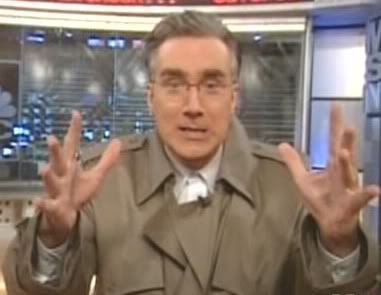
Friendly News Anchors

I'm not saying the polls don't matter, but just the constant influx of numbers and percentages causes us to pay attention to dramatic events (see "lipstick on a pig", Palin's convention speech) and short-term issues rather than policies and long-term vision. We also begin to read too much into small statistical swings, which don't really have an impact on voting in November. Just look at a listing of polling numbers in 2008: one poll had McCain up by 5% on August 14, yet just 5 days later Obama was up by 6%. Does anyone remember what happened, if anything, in those 5 days? Does it mean anything for November 4? Likewise, these recent polling numbers showing McCain leading by about 2-3% won't really matter either. Most American voters have already made their decision, and the independent swing voters are going to base their vote on more than a single speech, or a comment taken out of context.

* * * * * *
An important fact to keep in mind when reading all these polls is that in reality, none of them matter. The Electoral College system (within which Obama still leads) we use essentially means that the popular vote is legally and factually insignificant when it comes to deciding our President. I've always been quite opposed to this system, especially in recent times, as the "colorization" of states into red and blue ones means that only a few states are in play (e.g. Pennsylvania, Ohio, Florida, Michigan) each election. In places like California, New York or Mississippi, there is no incentive for voters to turn out, because all the electors will be assigned to the dominant party structure. In an election based on the national popular vote, however, each individual vote would matter for the national tally. Also, the winner-take-all system essentially eliminates the chances of success for a third party, though I guess that could be an advantage in some people's mind.

Of course, people argue that the Electoral College allows less populous states and rural areas have a voice in an election which would otherwise be dominated by urban areas, mostly on the coasts. While true, who cares? In one day, McCain and Obama are in two different Lebanons (not the country, but in Virgina and Ohio), while they rarely ever make appearances in big cities like Los Angeles, Dallas and Boston. In a democracy = majority rules, we shouldn't be electing our Presidents in this out-dated system (sidenote: unsurprisingly, many more Democrats and independents support a direct national election than Republicans).

If you're interested in this issue, check out a new law being implemented in some states to replace the College, the National Popular Vote Interstate Compact. This law, thought up by two ridiculously baller Indian-American law professors (Akhil Reed Amar and Vikram Amar), would allow states to award all their electors to the winner of the national popular vote, usurping the Electoral College without having to undertake the lengthy process of a Constitutional amendment. The California Legislature is currently considering it---if it passes, it would be a major boost to the overall plan.

Wednesday, September 10, 2008

'Tis the Season for Lying

The Washington Post has a good article out today detailing the ridiculously rapid increase in boldfaced lying by the presidential campaigns since the conventions. Of course it's not unsurprising that politicians would try to upstage each other in this fashion; throughout the campaign false rumors have been spread through the news media and Internet (see "Obama studied at a madrassa", "McCain thinks the economy is sound" or factcheck.org). What is shocking now is the degree to which the candidates (mostly McCain) are spouting more outrageous lies and more importantly, the powerful effect these lies are having on voters. Jonathan Weisman of the Post wrote:

As the presidential campaign moves into a final, heated stretch, untrue accusations and rumors have started to swirl at a pace so quick that they become regarded as fact before they can be disproved.

Some of the recent lies being pushed onto the American public by the candidates fall into the old category of misleading rumors and gossip that are not really that important for voters' decisions in November. The attention given to Obama claims about Palin's position on the "Bridge to Nowhere" and if she really did sell the gubernatorial jet on eBay are for the most part efforts by the media to keep politics on everyone's mind so that their commentators can analyze it. Yet more significant lies have started to enter the national political consciousness, and these lies may cause a great deal of harm.

Most notably, the Post article details how McCain's consistent yet false claim that Obama will raise taxes has found resonance among Ameriacns, as a recent poll found that 51% of Americans believed Obama would raise their taxes (even though
his plan exempts all who earn under $250,000 and actually reduces taxes for low-income househoklds). While McCain is by all accounts lying in regards to Obama's tax plan, the media's obsession with sound-bytes and TV ads allow his comments to become fact. Obama of course engages in the same activity (to a much lesser degree), as he continues to use McCain's quote that the "economy is fundamentally sound" despite it being months old, and McCain's consistent claims these days that the economy is experiencing difficulty.

The modern political TV advertising machine has no need for citations or references, and so candidates (and the political media apparatus) can basically say anything in a strong and uncompromising way and it becomes the major story of the day. Discovering the truth of certain policies or claims are left up to individual reporters, bloggers or campaign aides, and their fact-based and nuanced rebuttals necessarily lack the attention and glamor of the initial declaration. Perhaps the most over-the-top example of lying is
McCain's recent TV ad denigrating Obama's education policy because he, in their words, wants kids to learn "about sex before learning how to read". Anyone with a shred of intelligence (like the writers at TPM) can easily see that McCain's campaign is completely misleading the public with this ad, as it references Obama's support for an Illinois' bill that merely emphasized adding instruction on sexual disease prevention to existing sexual education in schools (in addition to strengthening protections against sexual predators). Yet if you go to any of the articles online citing this ad, you see hundreds of comments exclaiming how sick Obama is for making kindergarteners learn about sex!

Obama's campaign fought back with their own statement, but instead of setting the record straight with the real facts, they accuse McCain as "lacking in honor". While I'm all for the Obama campaign taking a more direct approach to rebutting lies from McCain's side, wouldn't it be more effective to dispute the ad and explain the Truth to the American public (if the media would also let them)? The sad thing is that for many Americans, the Truth may not even matter anymore.

UPDATE (9/10/08):
The New York Times released an article today strongly fact-checking McCain's sex education ad, writing that the ad "seriously distorts [Obama's] record". Yet a spokesman for McCain retorts that Obama "did not and cannot" dispute the content of the ad---are you kidding me?!
* * * * * * *

Also, just wanted to just wanted to welcome you all to the blog, and hope that some of my rants and ramblings connect with you (or at least elicit some response). Comments are always welcome and appreciated, as well as any suggestions to improve the blog. Alright, I'm back to the desk (and "Amended and Restated Subordination Agreements"...don't ask!).